Filter by

Teens' guide to college and career planning
This guide enables high school students to make important decisions involving life after graduation. Includes advice from guidance counselors, instructors, college admission officials, military officers, and other high school students, as well as tips for interviews, resumes, and cover letters
- Edition
- -
- ISBN/ISSN
- 9780768945898
- Collation
- iv, 284 p. : ill. ; 28 cm.
- Series Title
- -
- Call Number
- TR 378 MUC t
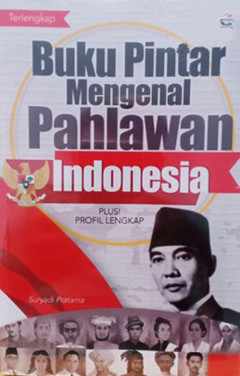
Buku pintar mengenal pahlawan indonesia
Kemerdekaan Republik Indonesia didapat dengan penuh perjuangan dan pengorbanan. Jutaan nyawa melayang demi satu cita-cita, Indonesia Merdeka! Jutaan nyawa gugur di medan pertempuran, ada yang kita kenang namanya hingga sekarang, namun, lebih banyak yang kita tidak pernah tahu namanya hingga saat ini. Buku ini kami hadirkan sebagai salah satu usaha untuk mengingat jasa-jasa besar mereka. Selain …
- Edition
- -
- ISBN/ISSN
- 9786026122896
- Collation
- 420 p. : ill. ; 23 cm.
- Series Title
- -
- Call Number
- SS IDN 923.5 PRA b
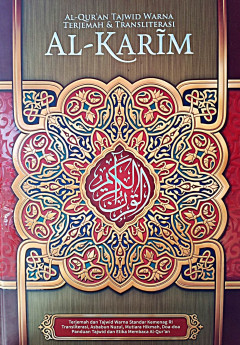
Al-quran al karim tajwid warna terjemah & transliterasi
- Edition
- -
- ISBN/ISSN
- 9786239027810
- Collation
- 604 p. ; 28 cm.
- Series Title
- -
- Call Number
- SS REF 297.122 SAN a
- Edition
- -
- ISBN/ISSN
- 9786239027810
- Collation
- 604 p. ; 28 cm.
- Series Title
- -
- Call Number
- SS REF 297.122 SAN a

Alkitab deuterokanonika two tone
- Edition
- -
- ISBN/ISSN
- 9789794639023
- Collation
- 1322 + 438 p. : maps ; 21 cm.
- Series Title
- -
- Call Number
- SS REF 220 LEM a
- Edition
- -
- ISBN/ISSN
- 9789794639023
- Collation
- 1322 + 438 p. : maps ; 21 cm.
- Series Title
- -
- Call Number
- SS REF 220 LEM a
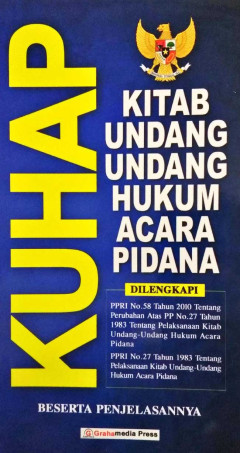
Kuhap: kitab uu hukum acara pidana beserta penjelasannya
- Edition
- -
- ISBN/ISSN
- 9789792594645
- Collation
- vi, 184 p. ; 21 cm.
- Series Title
- -
- Call Number
- SS REF 342.04 IND k
- Edition
- -
- ISBN/ISSN
- 9789792594645
- Collation
- vi, 184 p. ; 21 cm.
- Series Title
- -
- Call Number
- SS REF 342.04 IND k

Anne frank: the diary of young girl
Anne Frank kept a diary from 12 June 1942 to 1 August 1944 - After the war, when it became clear that Anne was dead, Otto Frank, Anne's father, decided to fulfil his daughter's wish and publish her diary
- Edition
- -
- ISBN/ISSN
- 9780141315188
- Collation
- 368 p. : ill. ; 20 cm.
- Series Title
- -
- Call Number
- SS 940.534 FRA a

Law: a very short introduction
Law touches every aspect of our daily lives. This book uncovers the rudiments of law, explaining the concepts, terms, and processes of legal systems in a clear, jargon-free manner, and revealing how the law provides a framework for almost every social, political, and economic activity from the settlement of international disputes to the protection of our personal fredom. The focus is on the Wes…
- Edition
- -
- ISBN/ISSN
- 9780198745624
- Collation
- 172 p. : ill. ; 18 cm.
- Series Title
- Very short introductions
- Call Number
- SS 340.2 WAC l
Economics: a very short introduction
Partha Dasgupta's Very Short Introduction to Economics is an up-to-date, intelligible introduction to how economics uncovers and explains the processes that shape our lives. Combining examples from everyday life with a global approach that considers not just the economics of the West but also the economics of the world's 2.4 billion rural poor, Dasgupta reveals how economics can give us deep in…
- Edition
- -
- ISBN/ISSN
- 9780192853455
- Collation
- 172 p. : ill. ; 18 cm.
- Series Title
- Very short introductions
- Call Number
- SS 330 DAS e
Hinduism: a very short introduction
Hinduism is practiced by about 80 percent of India's population, and by about 30 million people outside India. But how is Hinduism defined, and what basis does the religion have? In this Very Short Introduction, Kim Knott provides clear insight into the beliefs and authority of Hindus and Hinduism, and considers the ways in which it has been affected by colonialism and modernity. The author als…
- Edition
- -
- ISBN/ISSN
- 9780198745549
- Collation
- 140 p. : ill., maps ; 18 cm
- Series Title
- Very short introductions
- Call Number
- SS 294.5 KNO h
Buddhism: a very short introduction
Since its origins in India over two thousand years ago, Buddhism has not only spread throughout Asia, but also around the world. In this new edition of the Very Short Introduction to Buddhism, Damien Keown looks at how the tradition began and how it evolved into its present-day form. Explaining its central teachings and practices as well as key topics such as karma and rebirth, meditation and e…
- Edition
- -
- ISBN/ISSN
- 9780199663835
- Collation
- xx, 158 p. : ill., maps ; 18 cm.
- Series Title
- Very short introductions
- Call Number
- SS 294.3 KEO b
 Computer Science, Information & General Works
  Philosophy & Psychology
  Religion
  Social Sciences
  Language
  Pure Science
  Applied Sciences
  Art & Recreation
  Literature
  History & Geography