Filter by

BINUS SCHOOL Semarang Japan Experiential Study Tour 2025
- Edition
- -
- ISBN/ISSN
- -
- Collation
- x p. : ill. ; 22 cm.
- Series Title
- -
- Call Number
- SS REF 910.2 BIN a
- Edition
- -
- ISBN/ISSN
- -
- Collation
- x p. : ill. ; 22 cm.
- Series Title
- -
- Call Number
- SS REF 910.2 BIN a
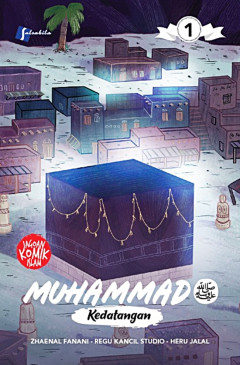
Muhammad: kedatangan
Komik ini mengangkat kisah hidup Nabi Muhammad. Bermula dari kedatangan sang pembawa pelita dalam kehidupan manusia di Jazirah Arab. Sejak kelahiran yang diikuri dengan peristiwa yang diabadikan dalam Al-Qur'an, hingga masa kanak-kanak beliau.
- Edition
- -
- ISBN/ISSN
- 9786021695975
- Collation
- 272 p. : ill. ; 21 cm.
- Series Title
- Muhammad ; 1
- Call Number
- SS IDN 297.63 FAN m

All in
All In follows Cassie Hobbes and the FBI’s Naturals team as they investigate a series of murders connected to a dangerous underground gambling ring. As the team goes undercover in a high-stakes casino environment, Cassie must confront increasingly personal risks, hidden motives, and the psychological toll of profiling killers. The novel deepens its exploration of manipulation, trust, and mora…
- Edition
- -
- ISBN/ISSN
- 9780316540841
- Collation
- 378 p. ; 21 cm.
- Series Title
- -
- Call Number
- SS F BAR a
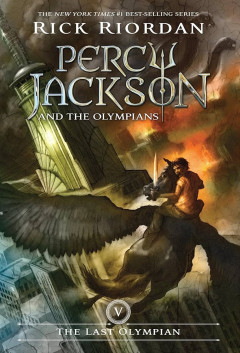
Percy jackson and the olympians: the last olympian
The Last Olympian concludes Percy Jackson’s first series as the long-foretold war between the Olympian gods and the Titans reaches its climax. As Kronos launches a final assault on New York City, Percy and the demigods of Camp Half-Blood must defend Mount Olympus and make choices that will shape the future of both the mortal and divine worlds. The novel highlights themes of loyalty, sacrifice…
- Edition
- -
- ISBN/ISSN
- 9781423101505
- Collation
- 381 p. ; 19 cm.
- Series Title
- Percy Jackson and The Olympians ; 5
- Call Number
- SS F RIO p
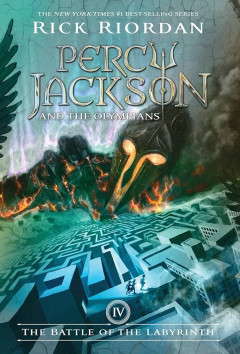
Percy jackson and the olympians: the battle of the labyrinth
The Battle of the Labyrinth follows Percy Jackson as he ventures into the dangerous and ever-changing Labyrinth to stop an invasion that threatens Camp Half-Blood. As the war between the Olympian gods and the Titans grows closer, Percy and his friends face powerful monsters, shifting alliances, and personal challenges. The journey tests their courage, trust, and readiness for the final battle a…
- Edition
- -
- ISBN/ISSN
- 9781423101499
- Collation
- 361 p. ; 19 cm.
- Series Title
- Percy Jackson and The Olympians ; 4
- Call Number
- SS F RIO p
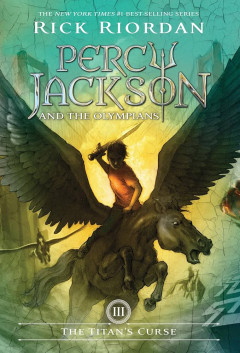
Percy jackson and the olympians: the titan's curse
The Titan’s Curse follows Percy Jackson as he joins a rescue mission to save a captured goddess and two demigods. As the prophecy of the Titan’s curse begins to unfold, Percy must face powerful enemies, unexpected alliances, and difficult choices. The journey challenges his understanding of loyalty, destiny, and sacrifice, while revealing greater dangers that threaten both the mortal world …
- Edition
- -
- ISBN/ISSN
- 9781423101482
- Collation
- 312 p. ; 19 cm.
- Series Title
- Percy Jackson and The Olympians ; 3
- Call Number
- SS F RIO p
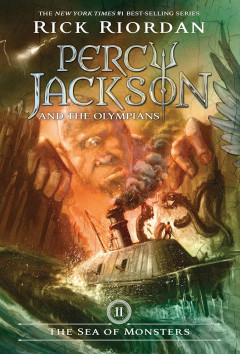
Percy jackson and the olympians: the sea of monsters
The Sea of Monsters continues Percy Jackson’s adventures as Camp Half-Blood faces a growing threat. When the magical barrier protecting the camp is poisoned, Percy and his friends set out on a dangerous journey across the Sea of Monsters to find the Golden Fleece, the only object that can save their home. Along the way, Percy confronts new monsters, family secrets, and challenges that test hi…
- Edition
- -
- ISBN/ISSN
- 9781423103349
- Collation
- 279 p. ; 19 cm.
- Series Title
- Percy Jackson and The Olympians ; 2
- Call Number
- SS F RIO p
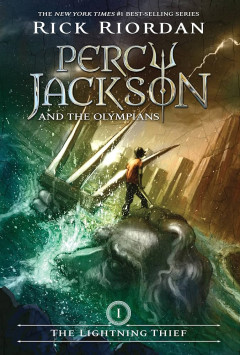
Percy jackson and the olympians: the lightning thief
The Lightning Thief follows twelve-year-old Percy Jackson as he discovers that he is a demigod, the son of a Greek god, and becomes involved in a dangerous quest. Accused of stealing Zeus’s lightning bolt, Percy must journey across the United States with his friends to prevent a war among the gods. Blending Greek mythology with modern adventure, the novel explores themes of identity, friendsh…
- Edition
- -
- ISBN/ISSN
- 9780786838653
- Collation
- 377 p. ; 19 cm.
- Series Title
- Percy Jackson and The Olympians ; 1
- Call Number
- SS F RIO p

The 7 habits of highly effective people
The 7 Habits of Highly Effective People presents a principle-centered approach to personal and professional effectiveness. Stephen R. Covey outlines seven habits that focus on self-awareness, responsibility, cooperation, and continuous improvement, guiding readers to move from dependence to independence and effective collaboration. The book combines practical guidance with ethical values, encou…
- Edition
- -
- ISBN/ISSN
- 9781982137274
- Collation
- xvi, 440 p. : ill. ; 21 cm.
- Series Title
- -
- Call Number
- SS 158.1 COV s

Start with why: how great leaders inspire everyone to take action
Start with Why explores how successful leaders and organizations inspire action by clearly understanding and communicating their purpose. Simon Sinek introduces the concept of the “Golden Circle,” which emphasizes starting with “why” before explaining “how” and “what.” Through real-world examples from business, leadership, and social movements, the book demonstrates how purpose-…
- Edition
- -
- ISBN/ISSN
- 9781405977593
- Collation
- xiv, 249 p. : ill. ; 20 cm.
- Series Title
- -
- Call Number
- SS 658.4 SIN s
 Computer Science, Information & General Works
  Philosophy & Psychology
  Religion
  Social Sciences
  Language
  Pure Science
  Applied Sciences
  Art & Recreation
  Literature
  History & Geography